Wednesday, March 29, 2006

Swales' Four Moves


According to John Swales, a professor of linguistics at The University of Michigan, all science journal articles mak four rhetorical moves in their introductions. These moves are designed to show to readers that the article is worth reading and that it has something new to say. These moves do not always occur in the same order, but they are always present. The four moves are:

1. Announce the topic and show its importance.
2. Review and summarize previous research pertinent to the topic.
3. Make a gap in the previous research, showing that it is incomplete in some way.
4. Introduce the author's present research as filling that gap.

The title of Graff and Birkenstein's book on argumentation condenses these four moves to just two: They say, I say.


Monday, March 27, 2006

Good blogging = Telling a good story

Chris Garrett of Performancing has a few paragraphs and pointers on good blogging as "telling a good story." Garrett notes that the 17 pointers need to consider the context and audience: For example, humor is not appropriate for all audiences. Some tips should always be considered, such as: "start with a good title."

Sunday, March 26, 2006

Working memory

I was working with the bibliographic and research note software Citation about a month ago and found out how to use its research function to download bibliography information directly into my datafile. What a savings of time! Well, I was just trying it again and can't remember how I did it. I had to go back to the manual, and no wonder: it's just a copy and paste of the abstract information. It's not quite perfect, however. Perhaps, I need to review it a little more to better understand it. I can't imagine that the company wouldn't have figured this out yet. Even so, I do like the way it lets you add notes to your sources, search them, and so on.

Saturday, March 04, 2006

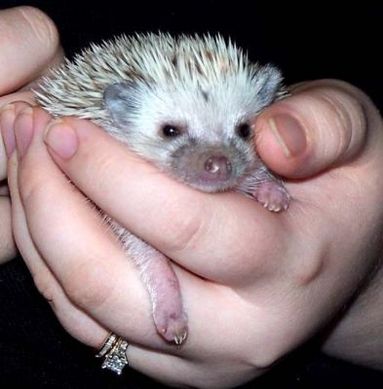
Cute Overload


Cute Overload has lots of "cute" photos. They say:

Springdoo: talking emails

Springdoo is a way of adding voice to your emails. Basically, you record your voice to an online storage place, copy the site location, paste it into your email, and send it: Podcasting without the iPod. Distant grandparents will love it!

Friday, February 24, 2006

Online calendars

The number of online calendars is proliferating. I have a CalendarHub account and I'm also signed up at planzo.com. I like planzo because it also has a "To Do" feature that emails me every day if I want it to to remind me of what I want to do.

And yesterday I signed up for a 30 Boxes calendar. I have to say it is easy to use, and one outstanding feature is the ability to have "buddies" whose events can come to your calendar, and your events to theirs, that is, if you want to do that.

Richard Mamanus on ZDNet reviews these and other "best of breed" online products. He cites Thomas Hawk's review of 30 Boxes as the "Best... Calendar... EVER."

Blogging via Flock

Flock, a web browser with a built-in blog editor, has been updated. The editor lets you

drop in photos from the topbar, include Web quotes and links, and tag your post. When you're ready, click Publish, and your wisdom is transmitted to your readers.

Also, you can store web items on the Shelf:

The Shelf is a scrapbook where you can keep interesting URLs, pictures or text snippets from any web page. When you're ready to blog about them, you don't have to search--they're on the Shelf.

Anything you drag from the Shelf into a blog post is automatically formatted as a blockquote, with proper citation.

Flock makes blogging easy. It's still in beta, however, so be prepared to encounter a few bugs.

Monday, February 20, 2006

Blogging for beginners

Darren Rowse (ProBlogger via LifeHacker) is having a series of posts for new bloggers to better understand how to go about blogging. He says,


Over the next weeks I will be presenting an introduction to blogging that will help PreBloggers and NewBloggers unpack some of the basics of blogging.


The series is based largely upon the questions I regularly receive from newer bloggers.


By no means do I want to come across as the all knowing expert in this
series - I’m very aware of my own limitations as a blogger and strongly
believe that it is only collectively as a group that we really know
anything. As a result I’d encourage everyone (beginners or old hands)
to see each post in this series as an invitation to share what you know
on the topics we cover. As we all contribute what we know I’m confident
that we’ll all learn and create a useful resource for bloggers starting
out.


Thursday, February 09, 2006

Ants and teaching

John Roach in the article "Ants have teacher-pupil relations, researchers report" (National Geographic News) reports on the research of Nigel Franks and Tom Richardson, biologists at the University of Bristol in Britain, who assert that at least one species of ants have teacher-student relationships. Ants of the species Temnothorax albipennis teach other ants how to find where food is in a method called tandem running, a method in which one ant goes slowly so another ant can follow and find the food place. Franks and Richardson define a teacher as one that “modifies its behavior in the presence of a naïve observer, at some initial cost to itself, in order to set an example so that the other individual can learn more quickly.” According to these researchers, because the lead ant is “sacrificing” by not going as fast as possible, it is teaching.

Not all agree that tandem running is an example of teaching. Marc Hauser, director of the Cognitive Evolution Lab at Harvard University, believes that information is being acquired but not a skill, so it’s an example of communication not teaching. Franks and Richards disagree, saying that, although the ants gain information, they are also learning how to find the location of the food, which they apparently consider to be a skill.

Sunday, January 29, 2006

Research book notes

I like the research book's emphasis that research is not just collecting information, but rather it must include the interpretation of data, and I like the notion that it begins with a question or problem. There's a nice checklist at the end of Chapter 1 (pp. 13-14) for questions to ask when evaluating research in a journal article or elsewhere.

At the end of Chapter 1 is also a set of guidelines for keeping a research journal. This is similar to the summary/comments on articles that you did last week. One difference is that it has you determine "keywords that capture the focus of the article." That's a good idea as it not only helps you understand the essence of the article, but it will also help you later when you conduct searches for articles.

Chapter 2 has a good checklist for defining and setting up your research problem (pp. 23-24) and another good checklist for evaluating your research plan (pp. 33-34). Usually when we use guidelines like these, we end up with a much better idea of what we need to do for our research.

Wednesday, January 25, 2006

Finding photos

Most photos on the Internet are copyrighted and cannot be used without permission. One place to find photos you can use is Flickr's Creative Commons, where you use the photos as long as you give credit to the owner. Another place is Yotophoto. Yotophoto has both creative commons photos and also public domain photos, for which credit need not be given.

Tuesday, January 24, 2006

Blogs in disciplines

In looking for topics for research, blogs may be a good resource. Go to Google's blogsearch and type in the word of your major or discipline, along with the word "blog" and see what you can find. For those interested in science, I found a group of blogs at ScienceBlogs.

Text-messaging

Charles McGrath, a writer for The New York Times, in his article "The Pleasures of the Text" covers the nature of text-messaging, giving examples of how users achieve efficiency and style, and he writes about its greater use outside of the U.S. Moreover, he argues that text-messaging is
a kind of avoidance mechanism that preserves the feeling of communication - the immediacy - without, for the most part, the burden of actual intimacy or substance.
That is, text-messaging lets people feel that they are connecting to others without actually doing it.

The article is short but informative. The claim about avoiding intimacy and substance is interesting. Is this a byproduct or a subconscious desire? Is it even an accurate description? I can imagine that when one is constantly text-messaging, not much is new, and so not much is of substance. In fact, when I ask my 6-year-old son what he did in school today, he almost always says, "I don't know." Is he avoiding intimacy? Certainly not when he climbs all over me, trying to get my attention. Similary, when someone asks me what is new, I generally respond, "Not much." Rather than an avoidance of intimacy, I imagine it's simply the reality of much being the same. Yet people ask the same questions every day as a matter of keeping social contact. It's not clear why text-messaging should be considered different from normal conversations.

Monday, January 23, 2006

2nd day of class

The 2nd day of class has finished, and we've set up accounts with blogger, netvibes, and del.icio.us. Actually, about half of the Mon-Wed class had trouble setting up the del.icio.us account. I'm not sure why. We'll just need to email the support staff if we continue to have problems.

These accounts will be used for us to record what we're learning, to keep a record of what we're reading, and to see what other others in the class are doing, along with other possibilities. Next, we begin to look at what we'll soon be writing.

Saturday, January 21, 2006

College students lack literacy skills

CNN News reports that "College students lack literacy for complex tasks."

The results cut across three types of literacy: analyzing news stories
and other prose, understanding documents and having math skills needed
for checkbooks or restaurant tips.
Well, we won't work on our math skills, but we will read a lot, analyzing a variety of articles, and we will write a lot, integrating points of the articles into our essays. Definitely, by the end of the semester, we will be able to pass this literacy test.

Friday, January 20, 2006

Science blogs

For those interested in blogs on science, go to Science Blogs (via Otto Khera at Elgg).

Thursday, January 19, 2006

"Chit Chat" on the Internet

Amanda LaBonar, a university student and on the Marquette Tribune staff, in her article "Chit Chat" asserts, "Personal responsibility [is] needed when blogging." She provides several examples of students who have been penalized for their online comments. Although noting that some people assert their right to free speech, she wonders about "how stupid and irresponsible people are being."

Definitely, most in the U.S. are on the side of individual freedom and free speech. However, practically speaking, people don't say anything in public that they want to at work, at least if they want to keep their jobs or unless they're the boss. And the Internet is very public. Saying something at work might reach only a few people. Writing to the world potentially can reach millions. Americans demand the right to privacy but, as LaBonar comments, give it away on the Internet. Ironical?

Bleezer, a new blogging client

Bleezer, a new, free blogging client, is now available for all platforms (Windows, Linux, Mac 10.3.9+). Right now, it doesn't work well with Blogger, but it does seem powerful. One advantage it may have over Performancing is that it's not tied to the browser. From the website:

Why use Bleezer to blog?

* Blog from anywhere. Work on Windows, OS X, and Linux.
* Work with any blogging service. As many as you want, even Blogger.
* Add tags for any tag service. Technorati, del.icio.us, or anything else.
* Create custom markup. Define your own key combinations for custom HTML markup.
* Spell check. Ensure everything is speeled spelled ok.
* Advertise. Ping Technorati, weblogs.com, ping-o-matic, Pingoat, or any other service.
* Work online or offline. Compose posts offline and post them when you want to.
* Did we mention Bleezer is free?

Wednesday, January 18, 2006

Teen Content Creators and Consumers

I just came across an interesting site: Pew Internet. It provides research and reports on how the internet is affecting American life. One report by Amanda Lenhart and Mary Madden look at how teenagers create and consume content on the Internet. They write,

American teenagers today are utilizing the interactive capabilities of
the internet as they create and share their own media creations. Fully
half of all teens and 57% of teens who use the internet could be
considered Content Creators. They have created a blog or webpage,
posted original artwork, photography, stories or videos online or
remixed online content into their own new creations.

I haven't had time to look at this report, but it's now on my reading list.

Schools alarmed by schools

Tara Bahrampour and Lori Aratani's article "Teens' Bold Blogs Alarm Area Schools" (Washington Post) reports on how schools are "warning students [and parents] that their online activities may affect not only their safety, but also their academic and professional lives" and how some schools in the Washington D.C. area have even taken disciplinary action against students, including suspension and expulsion. The author has quotes teenagers and parents about the youngsters' writing on the Internet.

As the article noted, teenagers have always kept diaries in which they wrote their inner thoughts, including derogatory and discrminatory comments. But now these thoughts are in the open for millions of people to read. Not too long ago, schools had the authority of parents, but no longer today. Although schools can control use of school-owed computers and resources, computers at home are private property. How schools will tackle comments by students that target others at the school is still uncertain. This topic is a new arena in which old theories of psychology and sociological can be tested.